
Obosu Discovery
Obosu Discovery is the platform OBOSU uses to turn a client’s idea into an agreed plan before any software is built.
- Product design, architecture and full-stack engineering
- Clients and the Obosu team
- Live, opening to its first clients
Status: Live, opening to its first clients
- Product design
- architecture
- full-stack engineering
- Clients
- the Obosu team
- Next.js
- React
- TypeScript
- PostgreSQL
- WebAuthn
- Zod

01
Overview
It is for clients starting a project with OBOSU, and for the OBOSU team working alongside them.
Instead of long email threads and loose documents, the client answers a guided set of questions about their project in their own online space. OBOSU reviews the answers, asks follow-up questions in the same place, shares designs for comment and approval, and turns what was agreed into a clear list of what will be built. Everyone can see where the project stands and what is waiting on whom.
02
The problem
Scope disputes start early. A conversation becomes a proposal, the proposal becomes a contract, and nobody can point at where a given line came from, because discovery happened in email, documents and memory.

03
What it does
One product, 4 views over the same records. Pick one to see the screen it lives in.
Where a project stands, and who holds the next step
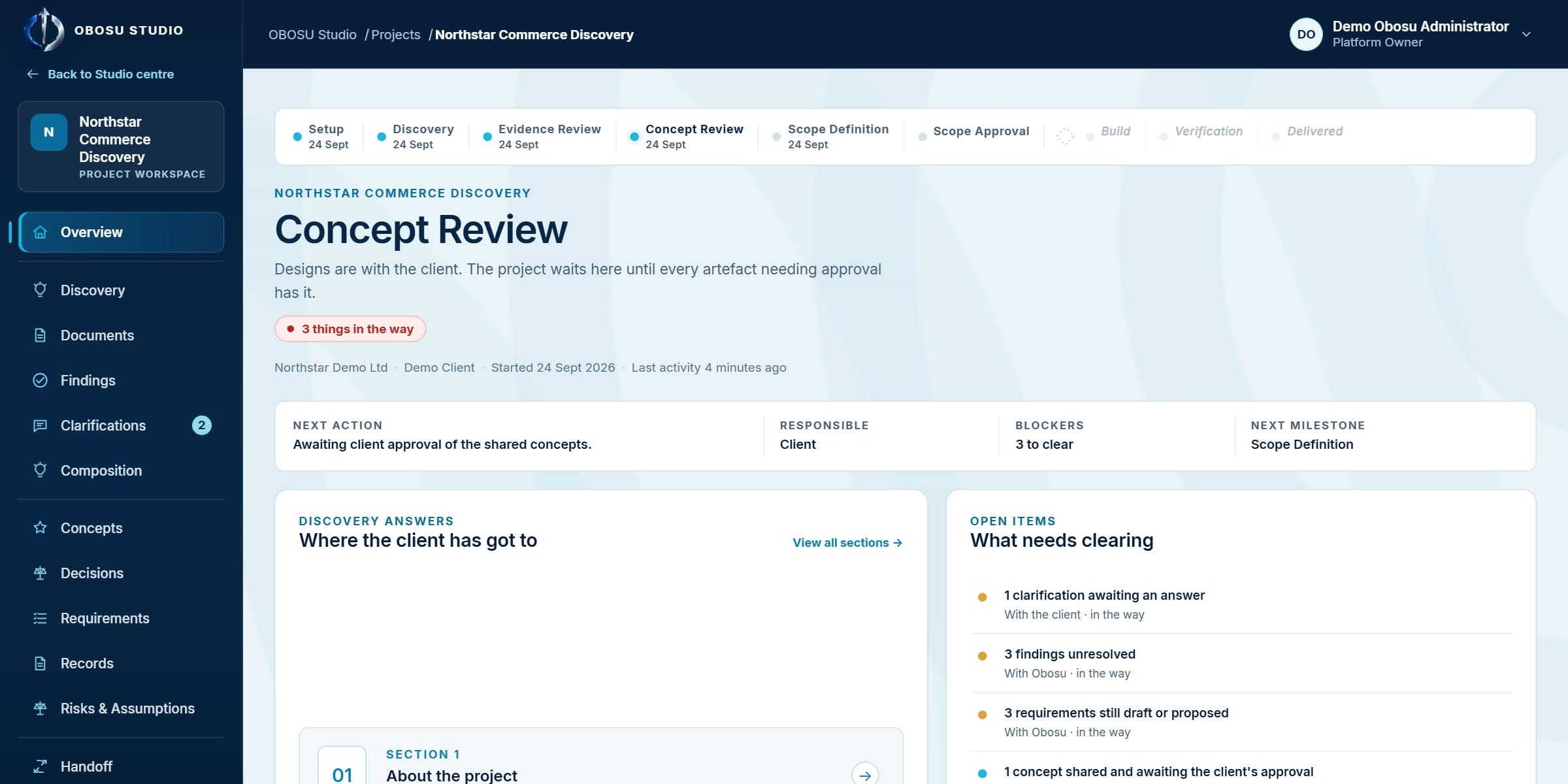
The whole journey
Every stage from setup to delivery, dated from the record that proves it.
What is in the way
Blockers are counted and named, never shown as a percentage complete.
The next move
Next action, who holds it and the next milestone, in one line.
More screens
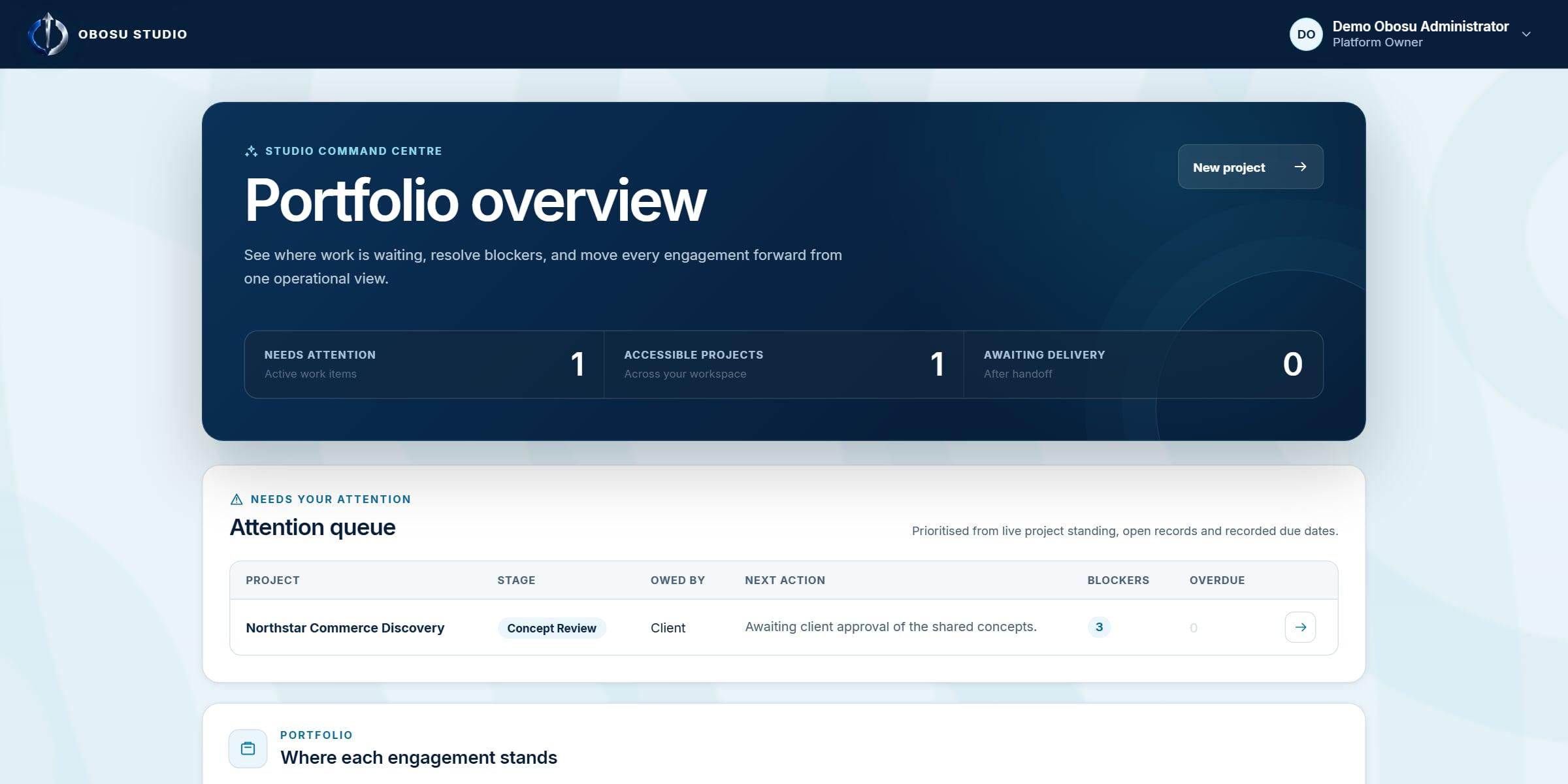
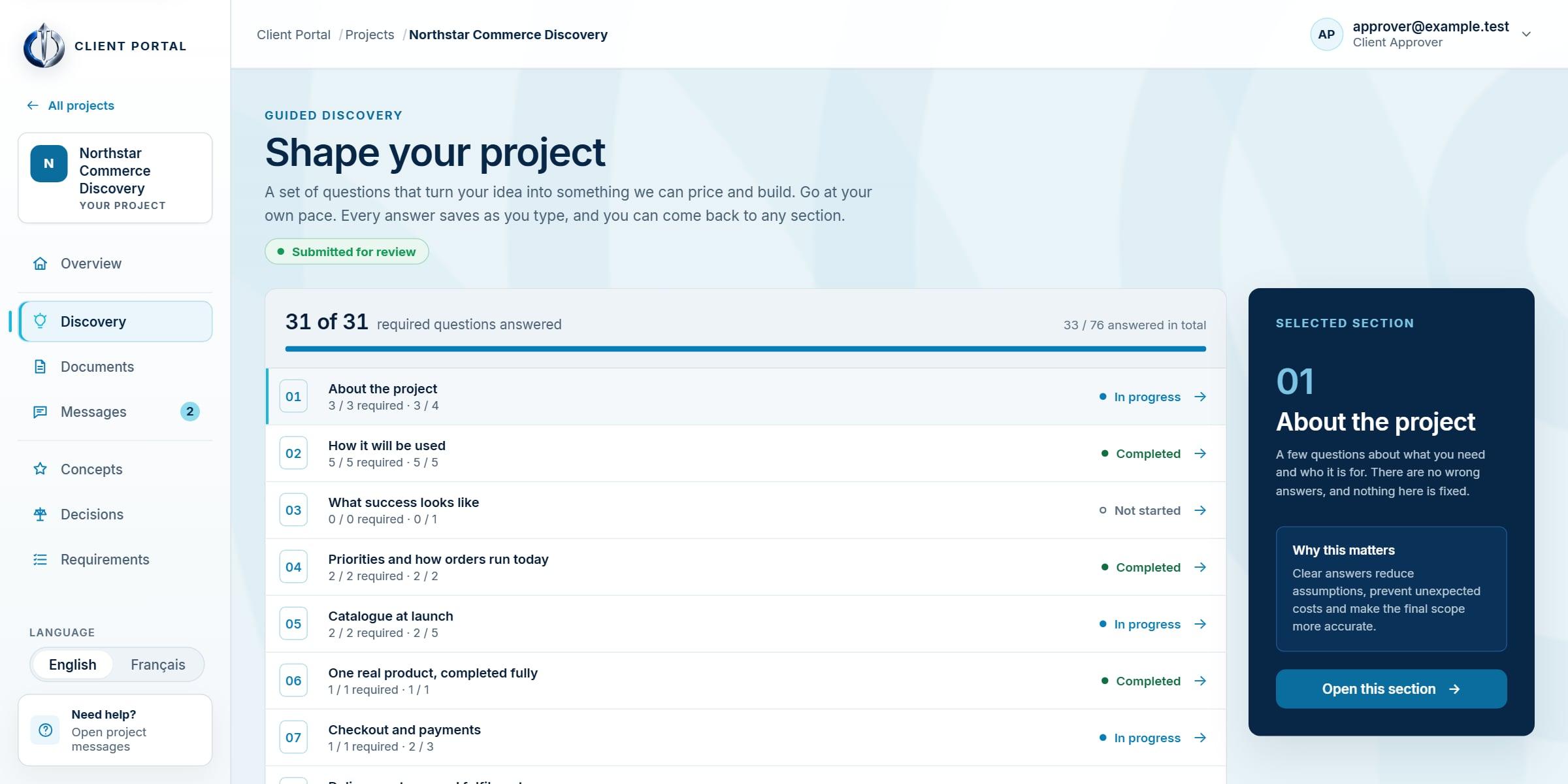
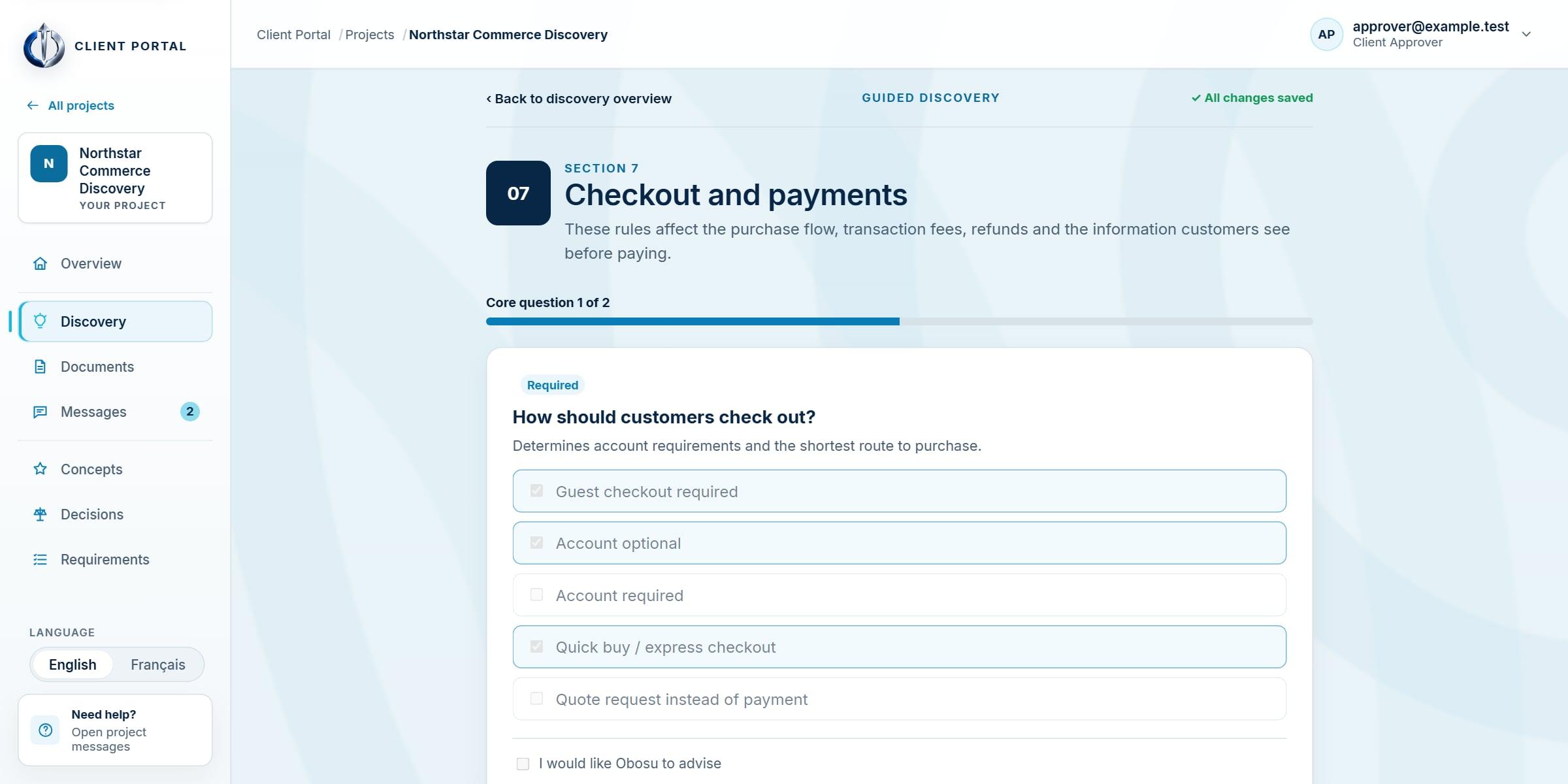
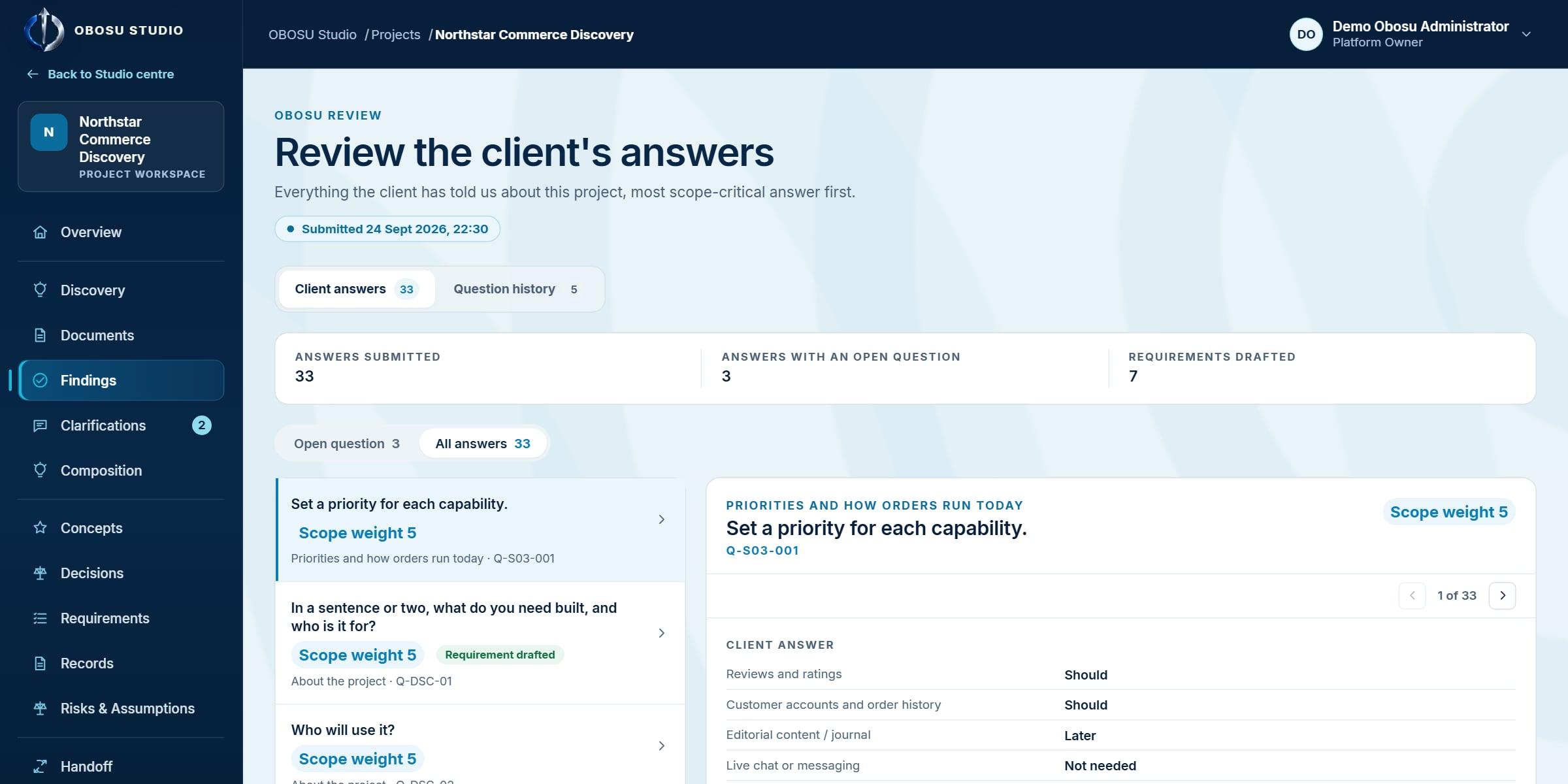
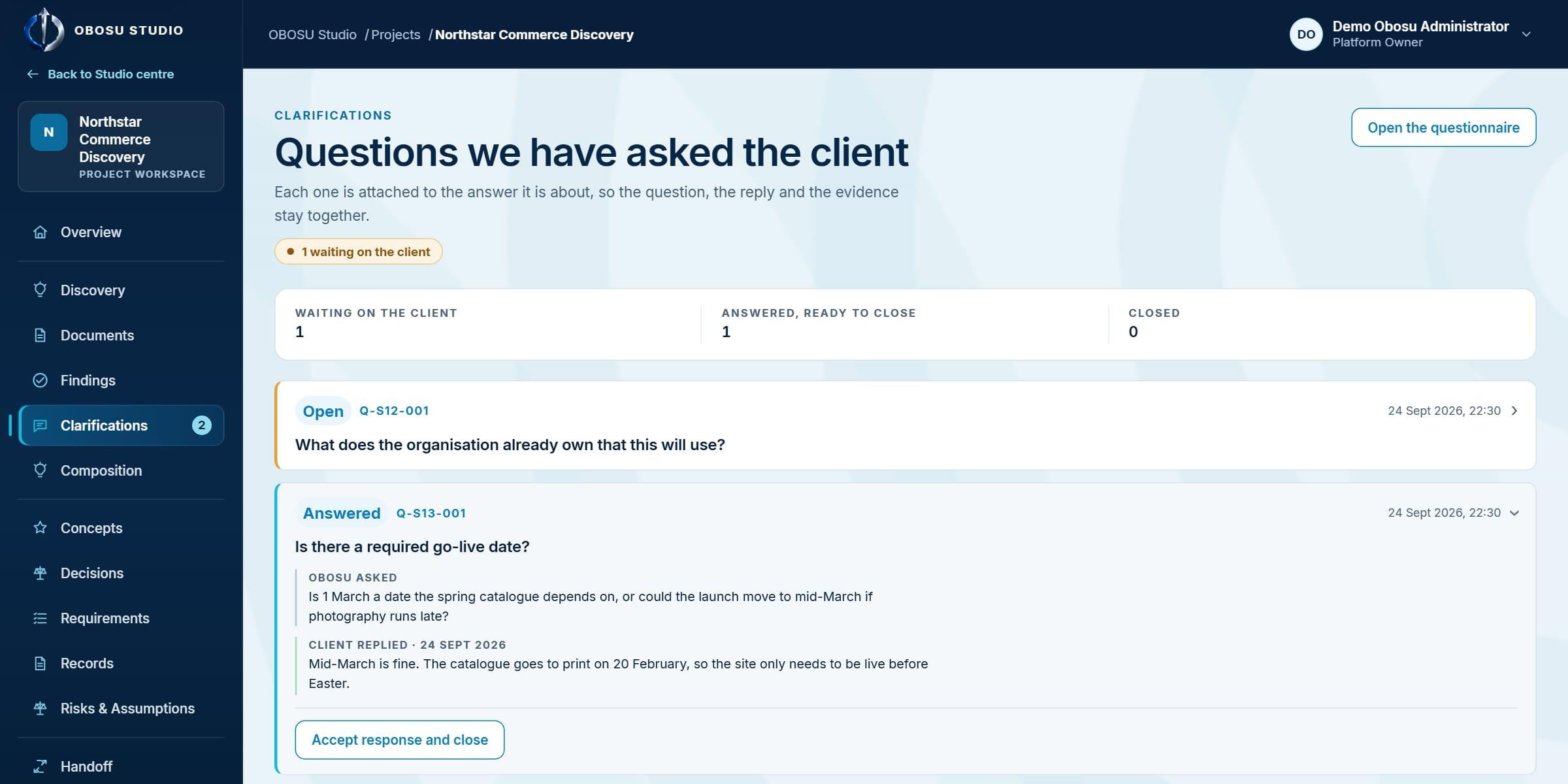
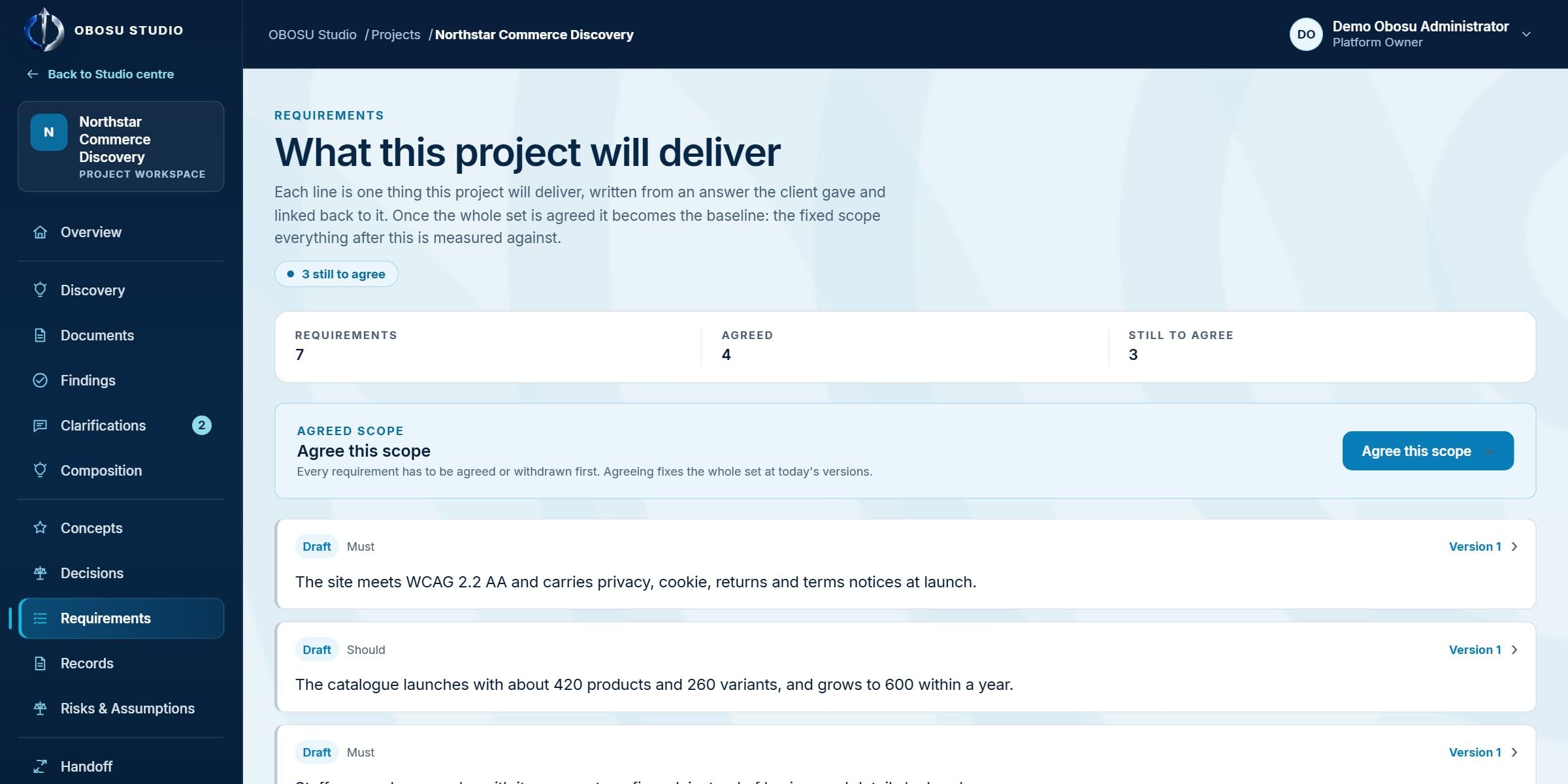
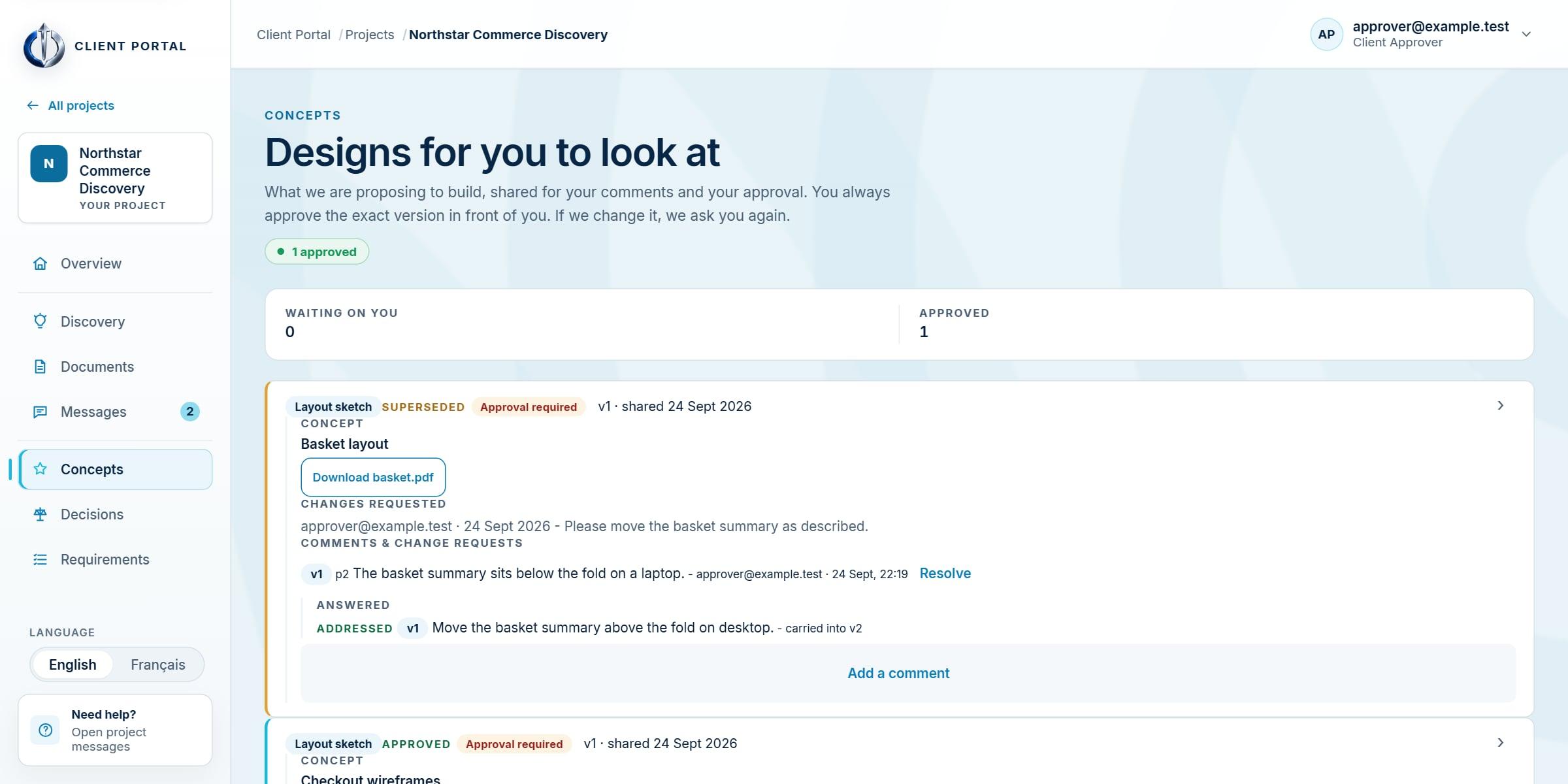
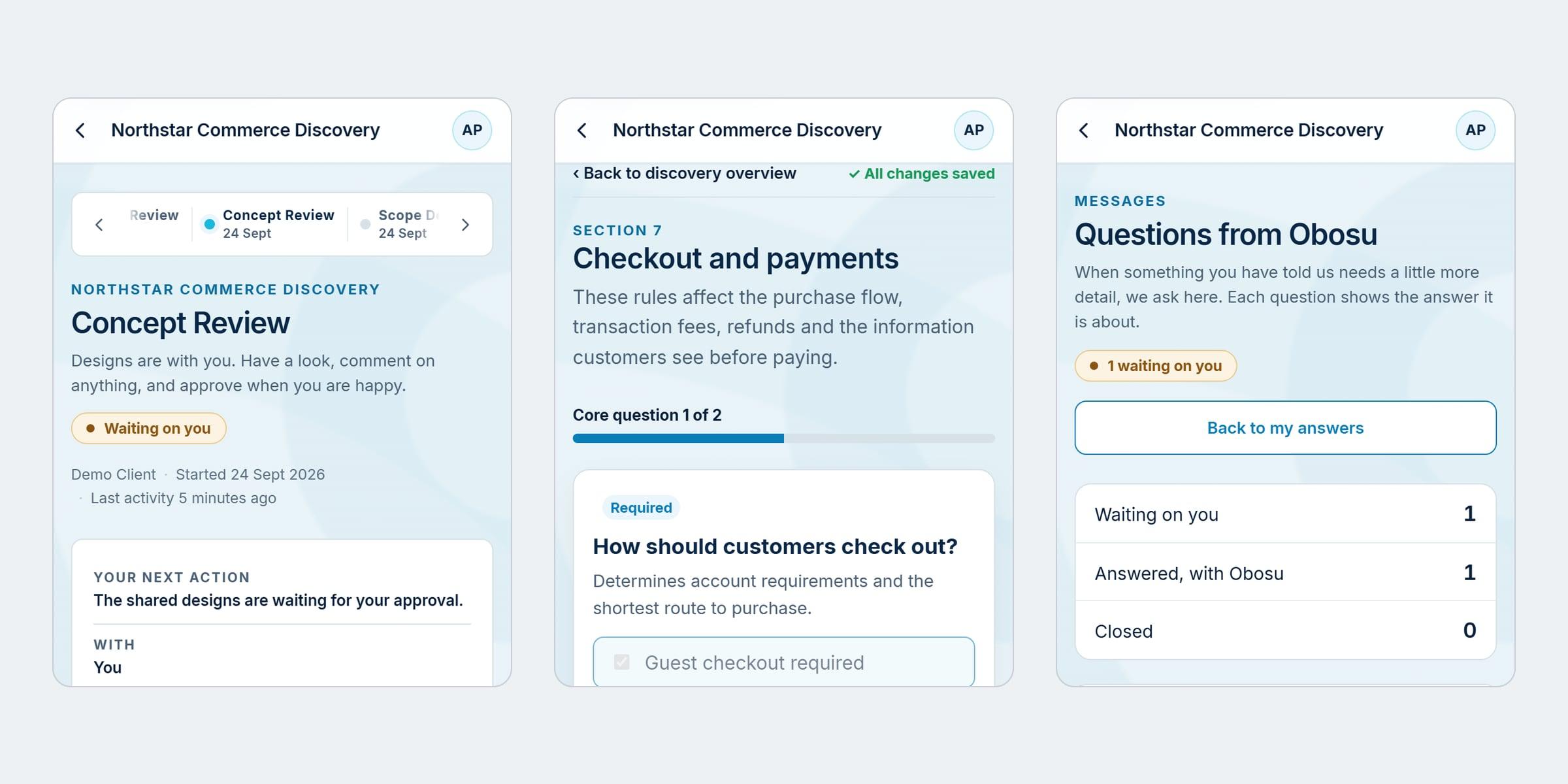
A project at a glance: where it stands, what is in the way and who holds the next step
01 of 09
04
How it was designed
I designed Obosu Discovery alone, working from a set of reference screens and settling each conflict between them in a written decision. The question bank merges two earlier workbooks, and review drove real changes: the project overview was rebuilt after it “felt like a small portion of Discovery”, and client wording was rewritten to be simple for anyone.
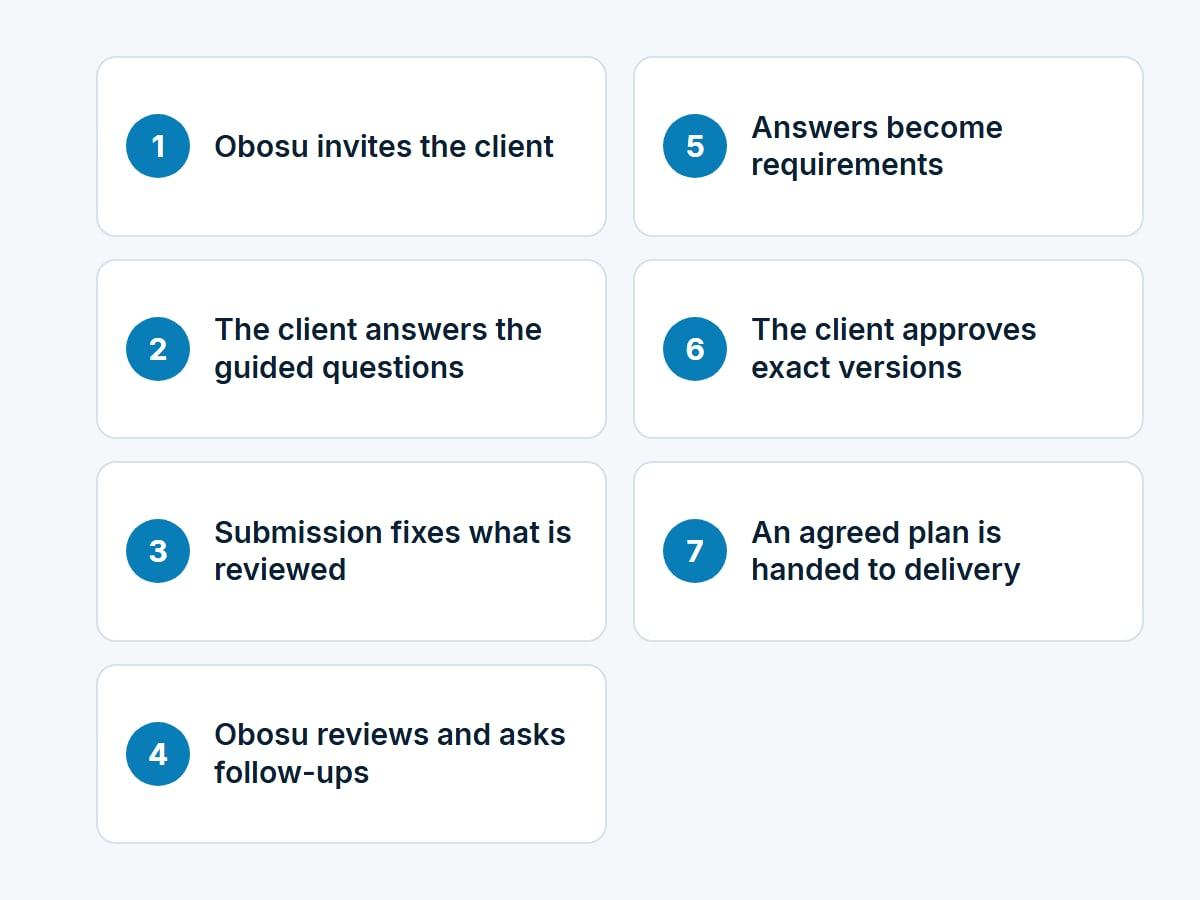
Flows
From an invitation to an agreed plan, in seven steps.
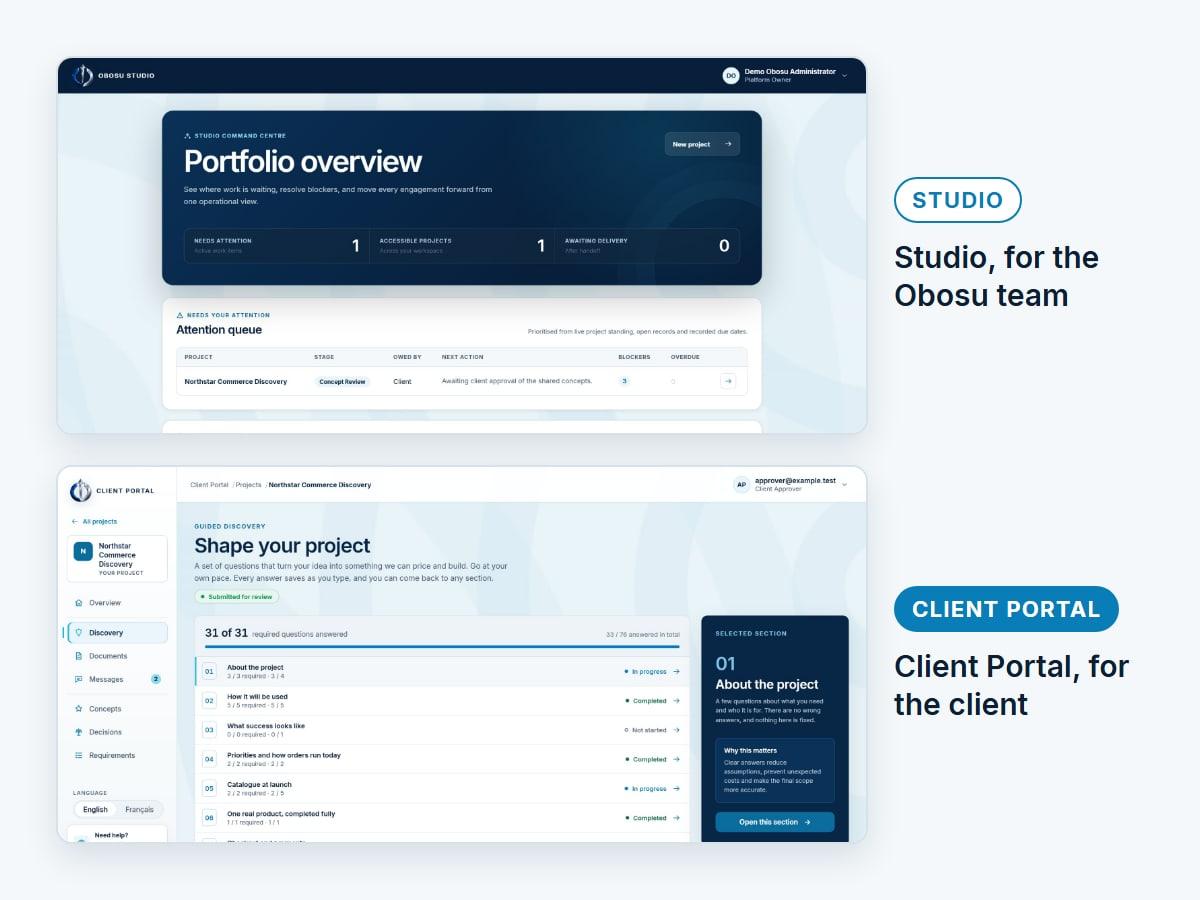
Two workspaces
One journey, with a workspace built for each side of it.
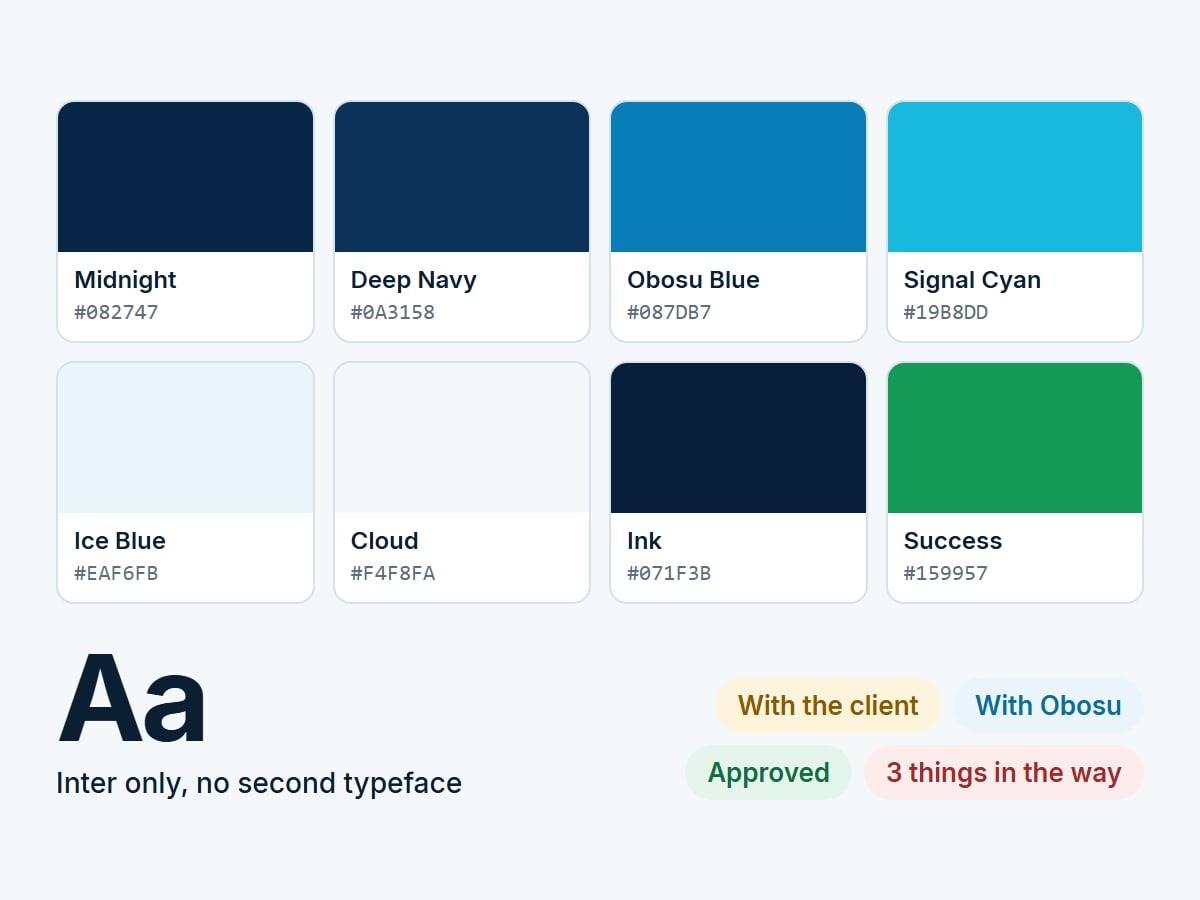
Design system
Mostly calm white and navy, with blue for action and cyan only as a signal.
05
Decisions worth explaining
- 01
Three entrances, never mixed
A public entrance, Studio for Obosu, and the Client Portal for clients are separate, server-enforced shells. Each role reaches only its own, and the product tests that none links outside itself.
- 02
Tenancy in the database
The application connects as a restricted role and PostgreSQL row-level security decides what each person can read, so one client never sees another even through a bug in a page.
- 03
Stage derived, never stored
Where a project stands is computed from the records that prove it, so there is no status field to drift, and no page shows a completion percentage.
- 04
Passkeys only for staff
Obosu staff sign in with passkeys and no password. Clients receive a one-time email link tied to an invitation.
06
Where it got to
The full journey is built, from invitation and questionnaire through review, follow-up questions, requirements and design approval to the agreed plan handed to delivery. It is live on its own production environment, with backups tested by restoring one, and is opening to its first clients.
- 110
- guided questions, in English and French
- 3
- separate entrances: public, client and Studio
- 1
- agreed plan handed to delivery
The boundary
What this does not claim
- No client has used it yet, so there are no usage figures.
- Formal sign-off of the complete scope is still being built.
- The screens show an invented client and project, not real client work.
A guided tour of the product, on a call.